
This week we traveled to Bali, Indonesia to enjoy some rest and warmth during our school's spring break. Our first few hours after landing were a whirlwind—stepping out of the air plane into the humidity and the sudden onslaught of money changers and taxi drivers competing for our attention; whisked at a breakneck pace from the coast to our hotel in Ubud, a village surrounded by rice paddies and forest. The Hindu religion dominates Ubud. There are temples and alters everywhere, and the colorful and sometimes frightening gods are a constant reminder of the unseen world. Our driver stopped so we could take a picture of these two women who were walking to a temple with offerings.


Every shopkeeper, restaurant and hotel owner places small offerings to the gods on the ground outside of their establishment. Usually these are banana leaves filled with fruit, crackers, and incense. It's hard to tell where the line is between religious devotion and nominal tradition; one day we were behind a group of school children who were picking up these offerings, throwing them at each other and stuffing them into mailboxes. At the end of the day they all end up in big trash heaps. 

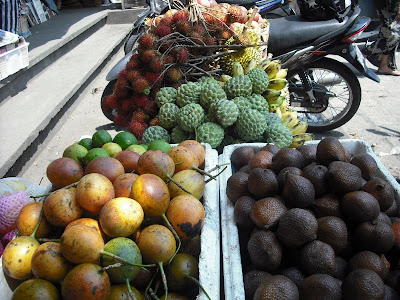
The lushness and variety of flora and fauna in Bali is astounding. Flowers explode from the left and the right down paths and sidewalks. Coconuts and bananas hang within plucking distance. Street vendors sell snake skin fruit, durian, mangosteen, oranges, and things I can’t name.


We met a very nice couple from Canada who were staying at our hotel. They filled us in on the best walking routes into and around the village, where to eat and what to see. The walk was beautifully lined with rice paddies.

About one minute after we wandered out of our hotel the first morning, we found ourselves in the sacred monkey forest. Monkeys basically do what they want in this Hindu community. We saw them boldly stealing fruit from the alters to the gods, and they perform all other sorts of lewd and indecent acts in the trees around Ubud. At first we were a little apprehensive wandering down the path, heavily populated by all sizes of monkeys—some were quite large. But they don’t really seem to care that you’re there—unless of course you are holding a banana or you’re staring at them in the eyes.


We left the village of Ubud for the peninsula of Nusa Dua on day 3. We were a little sad to leave Ubud for the more touristy coast, but we soon found that there was still plenty of authentic Balinese culture to experience.


All along the shore, there are structures like the one below for resting and getting out of the sun. It has a simple wooden platform that you can lay on while the wind from across the Indian ocean blows all around you.


We were sitting in one of them when we noticed a troop of kids banging on a gong and performing a dragon dance down the beach. They were Indonesian children trying to raise money for their orphanage. 

zz

zz
The beauty of the island and the friendliness of the people made our week in Indonesia so memorable and special. Even though we were there for only 5 days, each one seemed long and full. We have come back to busy Seoul feeling as though we have been away a long time and with a very fond place in our hearts for Bali.


